



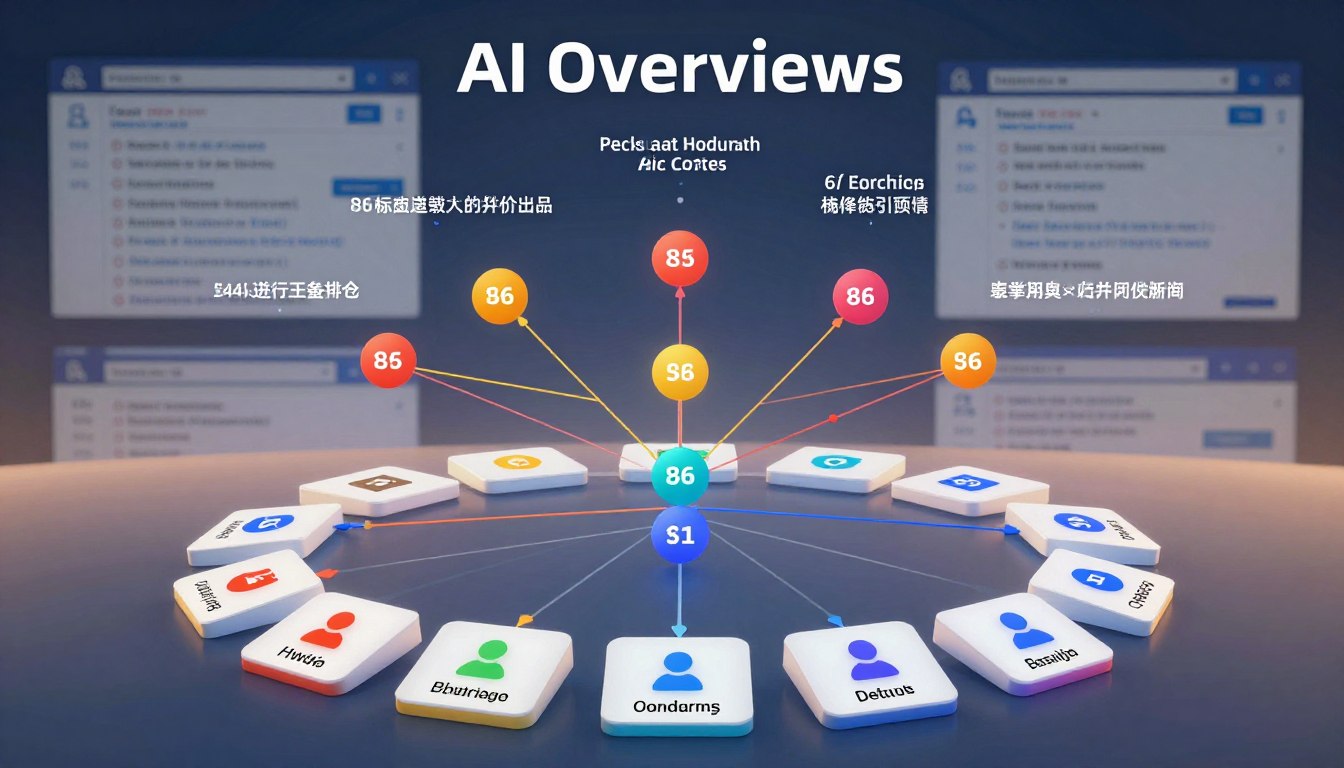



Brands in India face a new layer of exposure as modern answer engines synthesize and cite content from many sources.
This guide defines AI search visibility monitoring in plain business terms and sets clear expectations. You will learn how to build a prompt set, pick tracking tools, and compare platforms by coverage, exports, and pricing.
Think of prompts as the new keywords: the questions you track shape the program’s results. Good prompt selection is a strategic asset that affects citations, mentions, share of voice, position, sentiment, and platform split.
Results differ by engine—ChatGPT Search, Google AI Overviews, Perplexity, Copilot—so India teams should track across multiple platforms rather than rely on one dataset.
What you’ll get: a product roundup, a practical prompt methodology, and a 2026 tool checklist with API access, evidence logs, and workflow fit for Indian marketing teams.
Key Takeaways
- Prompts are the strategic equivalent of keywords for modern answer engines.
- Track citations, mentions, share of voice, position, sentiment, and platform split as KPIs.
- Compare tools on coverage, export features, pricing, and API access.
- Monitor across multiple engines for reliable results in India.
- Use the 2026 checklist to ensure evidence logs and workflow fit before purchase.
Why AI-powered search changed visibility tracking for brands
Modern answer platforms compress many pages into a single reply, so rank positions no longer tell the whole story for a brand.
Traditional seo relied on rank tracking and Search Console metrics to prove performance. Today, ai-powered search gives a single synthesized response that can cite several sources. That reduces clicks to classic search results and blurs which domain “owns” the answer.
What counts now is whether your content is cited, quoted, or presented as the authority inside that reply. On platforms like chatbots, being cited can mean a linked source, a top-of-page mention in google overviews, numbered references in Perplexity, or Copilot-style notes inside the Microsoft ecosystem.
The practical gaps are clear. Marketers lack a one-stop dashboard like Search Console to show citations. This creates a measurement gap and a competitive blind spot: strong traditional seo ranks do not guarantee presence in fused answers.
There is also an attribution problem. Teams may see shifts in traffic and conversions but cannot prove influence without disciplined tracking, stored responses, and evidence logs. For India decision-makers, that means budgets and stakeholder reports need screenshots and raw results to be defensible.
What to measure in AI search visibility monitoring
Start with a compact KPI set that proves presence and influence in answer-oriented results. Track how often your brand is cited and whether those citations make you the main source or a supporting link.
Citation frequency and context quality
Measure citation frequency as a raw count over time. Pair that with context quality: is your brand the first mention, recommended directly, or one of many listed? This shows authority, not just appearance.
Brand mentions, share of voice, and position within responses
Track brand mention rates versus key competitors to calculate share of voice. Measure position within responses — first mention versus buried — as a proxy for influence on the final recommendation.
Sentiment analysis for reputation risk
Use sentiment analysis to flag negative framings early. This helps teams act on PR, product fixes, or content updates before issues scale.
Platform breakdown across chatbots and answer engines
Don’t average everything into one metric. Track per platform and per llm to know where optimization works. For India, segment by language and city-level prompts to capture regional shifts.
- Store raw responses for audits and stakeholder reviews.
- Segment KPIs by platform to avoid misleading aggregates.
How to choose the best prompts for effective monitoring
Start by mapping prompts to revenue stages so each tracked question shows business impact. Tie every prompt to a funnel step: problem-aware, solution-aware, vendor shortlist, and purchase intent. This ensures your tracking reflects real commercial intent.

Prompt buckets that map to commercial intent
Brand prompts: brand name + product, pricing, support questions. These show whether the system tracks brand presence and authority.
Category and “best search” prompts: queries like “best [category]” or “top [product]” reveal ranked answers. These prompts matter because ranked lists drive conversions.
Competitor benchmarking prompts
Track comparisons: “[brand] vs [competitor],” “alternatives to [brand],” “pricing for [competitor].” Use these to see who is positioned as the authority and why.
India-specific localization and sizing
Add city modifiers (Mumbai, Bengaluru, Delhi), “near me,” INR pricing, and Hindi or regional language variants. Start with a tight set and grow over the month as signal stabilizes.
“Lock baseline prompts for trend integrity and run an experimental set for new research.”
| Prompt Type | Example | Purpose |
|---|---|---|
| Brand | brand + product support | Tracks brand authority |
| Category | best [category] | Measures ranking and conversion intent |
| Comparison | [brand] vs [competitor] | Competitor benchmarking and positioning |
How to organize prompts and tags for scalable visibility tracking
Organizing prompts with a clear tagging system turns a long list into an operational program for teams. Use tags to give prompts context so reports answer business questions, not just technical ones.
Minimum viable taxonomy: topic cluster + commercial intent + city/language + competitor set. This lets Indian marketing teams slice reports by product, funnel stage, or region without rebuilding prompts.
Tagging by persona, funnel stage, product line, and topic
Apply persona tags (CFO, IT admin, founder), funnel tags (awareness, consideration, purchase), and product-line labels. Combine tags to produce actionable roll-ups for leadership.
Avoiding duplication across engines and countries
Keep a canonical prompt library and add engine-specific variations only when syntax changes outcomes. For country tracking, use one global library and append country or language tags like India-English, Hindi, Tamil.
- Workflow tie-in: assign owners by tag cluster (SEO, content, PR, product marketing) and route alerts on sentiment drops or competitor surges.
- Scaling tip: dashboards should roll up by tag so 25 prompts or 500+ remain clear.
- Tools matter: pick tracking tools that support rich tagging, exports, and multi-engine coverage at scale.
Evaluation checklist for search visibility tools in 2026
Choose platforms that capture multiple engines and keep audit‑grade evidence. Use a short demo checklist so procurement and marketing teams can validate coverage, reporting, and price before purchase.
Must‑have checks:
- Multi‑engine coverage: confirm support for Google AI Overviews/AI Mode, ChatGPT, Gemini, Claude, Perplexity, Meta AI, and Copilot. Ask whether coverage is stable across regions and languages.
- Evidence logs: insist on screenshots, stored raw responses, and exportable records for audits and leadership reviews.
- Source & citation analysis: verify the depth of domain/URL attribution so teams can prioritise content and PR fixes.
- Competitive tracking: request share‑of‑voice views, prompt‑level competitor comparisons, and tag filters by engine.
- Exports & API: require CSV/JSON exports, Looker Studio connectors, and an API for automated reporting to agencies and in‑house BI.
- Onboarding & learning curve: prefer vendors with clear UX, strong docs, and quick time‑to‑value for lean Indian teams.
- Pricing realities: pressure‑test whether billing is per prompts, per responses, per brand, or per month and check limits on engines, countries, or seats.
Buyer safeguard: run a two‑week proof of value on a controlled prompt set and confirm outputs match real interfaces and business expectations.
SE Visible for strategic AI visibility tracking and sentiment analysis
For CMOs who need a single-pane view of brand performance, SE Visible turns complex signals into clear metrics. It aggregates results across ChatGPT, Google AIO/AI Mode, Gemini, and Perplexity so leaders see one scorecard instead of many dashboards.
Best for CMOs and brand leaders needing a high-level dashboard
Executive-friendly reporting: SE Visible simplifies brand data into a visibility score, average position, and net sentiment. Reports use plain language so boards and marketing leadership can act fast.
Core strengths: multi-platform visibility, competitor comparison, net sentiment
The platform emphasizes competitor benchmarking and prompt insights. Teams can spot which brands appear alongside you and where you lose share on commercial prompts.
Net sentiment tracking surfaces weekly shifts. That helps detect reputation risk during product launches or PR moments.
Pricing and free trial details for budgeting in India
SE Visible offers three tiers: Core $189/mo (450 prompts, 5 brands), Plus $355/mo (1000 prompts, 10 brands), and Max $519/mo (1500 prompts, 15 brands). A 10-day free trial lets Indian teams validate baseline prompts and top competitors against real interfaces.
“The clean dashboard and competitor comparison with sentiment at-a-glance made reporting simple.”
Tip: Use the free trial to track a small prompt set, confirm source analysis, and verify that insights align with stakeholder expectations before committing to a plan.
Ahrefs Brand Radar for AI share of voice at massive scale
For teams already invested in Ahrefs, Brand Radar surfaces AI-era brand signals at scale without extra setup. It taps Ahrefs’ large query index and rolls up how engines mention your brand across broad topics.
Huge index, less manual work: Brand Radar processes massive query sets across ChatGPT, Google AIO, Claude, Gemini and others. That scale helps uncover mentions you would miss with a small prompt list.
“AI SERPs” made practical: Think of the view as a SERP-style snapshot for answer engines. It shows which sources and pages get cited for category queries, helping SEOs treat these results like classic rankings.
Citation Tracker and gap analysis
Citation Tracker lists URLs that get referenced most often. Content teams can use that list to protect or refresh high-trust pages.
Gap analysis surfaces unbranded category prompts where competitors are cited and you are not. That becomes a prioritized content roadmap for product and content teams in India.
- Use case: discovery and trend signals for teams that already use Ahrefs for seo work.
- Advantage: large index uncovers broad brand mentions without building a prompt library from scratch.
- Limit: rich in data but less prescriptive on execution—expect to translate insights into targeted prompts and tasks.
“Brand Radar is excellent for discovery; convert findings into controlled prompt sets for ongoing tracking.”
Buyer note: Brand Radar is included with Ahrefs accounts. Ahrefs plans start at $129/month (Lite), so this approach is cost-effective if your team already pays for Ahrefs. For teams new to Ahrefs, budget for the account and plan a phased rollout: discovery in Brand Radar, then operationalize top gaps into a focused prompt program for continuous tracking.
Profound AI for enterprise AI search visibility with CDN traffic integration
Profound AI positions itself as the enterprise option for large Indian and global brands that need rigorous attribution and governance. It records real user interfaces from multiple engines and pairs those captures with downstream traffic data.
Why real-interface tracking matters
Why tracking real interfaces and CDN logs changes attribution confidence
Capturing actual responses from live interfaces reduces ambiguity versus simulated outputs. Stakeholders get stored evidence they can audit, improving trust in any analysis or report.
CDN integration
Profound AI links Cloudflare and Akamai logs to captured responses. This connects a cited answer to real human visits and conversions, strengthening attribution beyond “we were mentioned.”
When the setup tradeoff makes sense for large sites and compliance needs
Enterprise features: SOC2, SSO, role-based access, and an enterprise API support governance and scale. The platform also offers sentiment and context analysis plus prompt-volume research to prioritise monitoring and optimisation.
- Tradeoff: deeper setup and ops needed; best when dedicated teams can act on findings.
- Pricing anchors: Starter $99/month (ChatGPT-only, 50 prompts); Growth $399/month (100 prompts, 3 engines); Enterprise tier available.
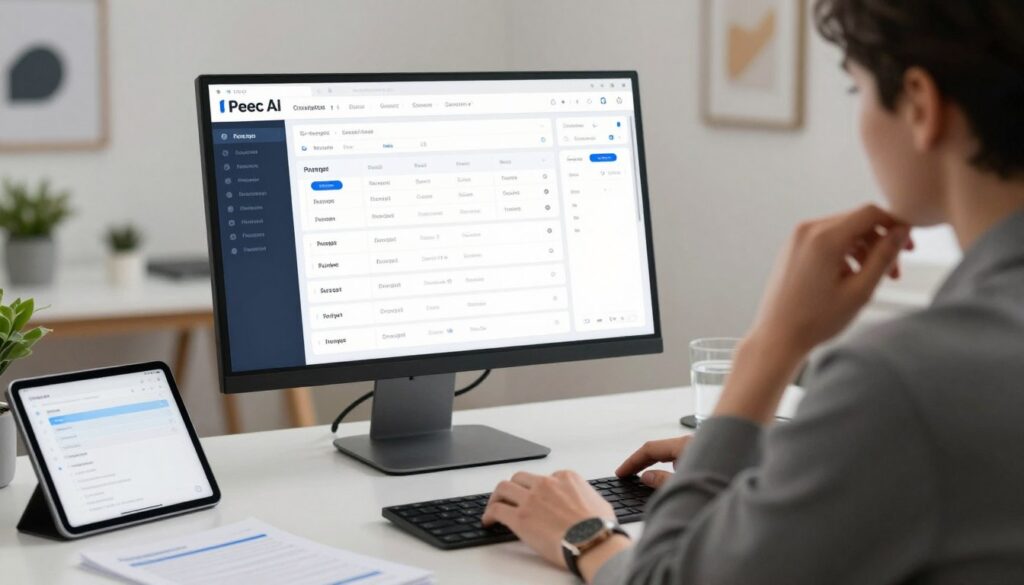
Peec AI for fast prompt setup, tagging, and clean exports
For teams that need fast ramp-up, Peec AI turns a prompt list into actionable reports in minutes. The platform offers suggested prompts and live onboarding so Indian marketing teams can begin tracking quickly.
Prompt organization and multi-engine coverage
Prompt organization with tags, multi-engine tracking, and sentiment
Peec lets you tag prompts by product, funnel stage, and country for clear rollups. Tags make it simple to slice results by city or language when you run programs across India and other markets.
Coverage: ChatGPT, Google AIO, Perplexity, Claude, Gemini, and Copilot. Sentiment is included to flag shifts in brand tone and reputation.
Reporting and exports
Reporting options: CSV exports, Looker Studio connector, and API
Report outputs include clean CSV exports, a Looker Studio community connector for client-ready dashboards, and a documented API for automated workflows. These formats suit agencies and in-house BI alike.
What to expect if you want insights without prescriptive audits
Peec focuses on quick, usable signals rather than deep audits. It surfaces source clues—G2, LinkedIn, Reddit, NYT—so teams can act on insights, not wait for a full forensic report.
- Positioning: ideal for India-based teams that want rapid implementation and low onboarding friction.
- Pricing (euros): Starter €89/mo (25 prompts, 3 countries), Pro €199/mo (100 prompts, 5 countries), Enterprise €499/mo (300+ prompts).
- Cadence: weekly checks for tracking shifts and monthly Looker Studio reports to leadership.
“Start with Starter to prove value, then scale prompts and countries as coverage matures.”
Scrunch, Rankscale AI, Otterly AI, and Writesonic GEO for different budgets and use cases
Not every platform fits every team—choose by workflow, compliance needs, and the content work you plan to do.
Scrunch is built for larger teams and agencies that need prompt-level monitoring, rich segmentation, and SOC2-grade controls. It covers many engines, supports GA4 integration, and provides sentiment plus share-of‑voice reporting. Expect a higher entry cost: Starter is $300/mo for 350 custom prompts.
Rankscale AI
Rankscale AI is the low-cost entry point. It offers a visibility score, average position, and page-level citation tracker. Pricing is usage-based: Essential $20/mo (480 responses), which can be ideal for testing without a large upfront commitment.
Otterly AI
Otterly focuses on deep GEO audits and prioritized recommendations. The platform checks 25+ GEO factors and then gives a ranked fix list. Plans begin at $29/mo (15 prompts), with a Standard tier at $189/mo for 100 prompts.
Writesonic GEO
Writesonic GEO blends monitoring with content creation and “AI Visitors” analytics. It integrates with WordPress and Cloudflare to close the loop between discovery and site fixes. Professional tier runs at $249/mo and suits teams that want execution inside the same platform.
| Tool | Best for | Key strengths | Starting price |
|---|---|---|---|
| Scrunch | Enterprise / agencies | Multi-engine coverage, segmentation, SOC2, GA4 | $300/mo (350 prompts) |
| Rankscale AI | Budget-conscious teams | Page-level citation tracking, usage-based responses | $20/mo (480 responses) |
| Otterly AI | GEO audits & recommendations | 25+ GEO factors, prioritized fixes | $29/mo (15 prompts) |
| Writesonic GEO | Execution + content teams | Content creation, visitor analytics, WP/Cloudflare integration | $249/mo (Professional) |
How to choose: pick Scrunch for governance and segmentation; choose Rankscale for low-cost tracking tests; use Otterly for actionable GEO audits; select Writesonic when you want content production and analytics in one place.
India procurement note: compare USD/EUR pricing, confirm seat limits, verify included engines, and ensure CSV/JSON exports or API access for your reporting stack.
Pilot tip: run the same prompt set across two platforms for 2–4 weeks to compare engine coverage, data quality, and practical usefulness before committing.
Conclusion
Start lean: track the most valuable prompts first, validate results, and scale with evidence. Tie each prompt to revenue or funnel stage so the program shows clear ROI.
Standardize a KPI stack: citation counts, brand mentions, share of voice, position, and sentiment. Break these down by engine and platform rather than averaging them away.
For India teams, benchmark competitors, run a focused prompt set for a month, then expand coverage as signals stabilise. Prioritize raw responses and screenshots as evidence when reporting to leadership or clients.
Pick tools that fit your org: SE Visible for exec dashboards, Brand Radar for Ahrefs users, Profound for enterprise, and Writesonic or Otterly for executional work. Match pricing models to how often you review data and ship fixes each month.
As google overviews and similar formats grow, a maintained prompt library and multi‑platform coverage will become a lasting competitive edge.