






This article reports a data-led comparison of how an AI with web access and a major search engine present sources for non-branded B2B questions. We ran a controlled experiment on Sept 13–14, 2025 and reviewed platform-wide citation patterns from Aug 2024 to Jun 2025.
Similar URLs can appear in both systems, but the mix of domains, the authority model, and the way links support answers often differ. That matters for marketers, analysts, and researchers in India who rely on search and on AI for information.
We’ll show what a different citation share looks like: the AI tends to name more branded domains, while some industry outlets and partner content lose visibility. Results don’t match does not mean one is always right.
Read on to learn how sources, citation share, and supporting links diverge, why trust changes, and what to measure next to protect visibility across traditional search and AI-driven summaries.
Key Takeaways
- Empirical test (Sept 2025) shows different source mixes between AI web answers and classic search results.
- AI outputs often cite more branded domains; intermediary industry sources may lose share.
- “Different” outcomes mean different source lists, links, and paths to perceived credibility.
- Indian teams should track sources, citation share, and rankings across both platforms.
- Optimize for both traditional search and AI visibility to avoid blind spots in research and discovery.
Why citations are the real battleground for search, trust, and research
Where an answer comes from matters as much as the answer itself. Visible sources let users audit claims, click through for detail, and repeat checks when a model compresses complex facts.
What a citation looks like in conversational versus list-based results
Search results on a classic search engine offer many ranked links and snippets. That creates breadth: users see competing viewpoints and can scan dates and publishers.
Conversational responses provide fewer, curated citations embedded in the text or a short sources list. That can amplify the influence of whichever source is selected.
Why accuracy can diverge even when both pull from the web
- Different ranking signals matter: structured docs or official pages may be preferred by one system.
- Models compress multiple pages into single statements, which can lose nuance.
- Natural language queries change context and intent, shifting which source information appears for top-of-funnel research.
Practical workflow: use a conversational tool to summarize fast, then run a google search to broaden discovery, check freshness, and gather more links for rigorous research.
Measurement note: later we focus on citation share and citation frequency to compare source visibility across answers and search results.
How we compared ChatGPT and Google Search citations using real queries
Our experiment recorded which web domains each engine referenced for the same B2B research queries. Data collection ran on Sept 13–14, 2025 to keep timestamps and freshness consistent.
Experiment setup
Experiment setup from September 2025: engines, companies, and non‑branded questions
We tested two systems: the ChatGPT web interface with web search enabled and the google search API. The test used 80 high‑intent, non‑branded questions for each company: Mindtickle (horizontal SaaS), MotherDuck (developer tools), and Prodigal (vertical FinTech).
Extraction and normalization
How URLs were extracted, normalized to root domains, and categorized
Every cited URL was pulled from answers and stored as raw data. We then normalized each URL to its root domain to avoid overcounting multiple pages from one site.
Domains were categorized into logical groups: self, competitor, partners, forums, industry publications, blogs, encyclopedic, academic, and other. This approach lets our analysis focus on source patterns and learning about authority rather than single out truth claims.
Limits: the method compares citation behavior across many queries to highlight patterns. It does not prove accuracy, but it does show which domains each model and search engine treats as repeatable evidence.
ChatGPT vs Google citations: what the data says about sources and authority
The data reveal a clear shift in which web sources each system leans on for authority.
What this table measures: share of total citations across the dataset. It lets you read how each engine builds authority from the web on an apples‑to‑apples basis.
Branded domains rise in one system
Self jumps from 2.9% to 5.9% (+3.0 pts). Competitors climb from 17.7% to 28.8% (+11.1 pts).
This pattern suggests the model treats market participants and vendor pages as primary source material. That can shift category definitions toward brand content.
Ecosystem partners and industry outlets lose share
Ecosystem partners fall -4.8 pts (35.5% → 30.7%). Industry publications also drop -4.8 pts (12.6% → 7.8%).
Intermediary commentary and specialist reporting thus occupy less central roles in the model’s source mix.
Forums and neutral sources
Discussion forums decline -7.9 pts (18.4% → 10.5%), but they often move to supporting evidence rather than primary proof.
Meanwhile, encyclopedic sources rise +3.0 pts (0.1% → 3.1%) and academic sources increase +1.4 pts (2.1% → 3.5%). This neutral‑source bump signals more factual tone in answers.
Reading share vs frequency
Share of citations measures slice of all links. It is not the same as how often a source category appears across answers.
A forum can appear in many responses yet contribute a smaller share if each answer includes fewer forum links. Treat share and frequency as separate metrics when planning visibility.
| Category | Google → Model (share) | Delta (pts) |
|---|---|---|
| Self | 2.9% → 5.9% | +3.0 |
| Competitors | 17.7% → 28.8% | +11.1 |
| Ecosystem Partners | 35.5% → 30.7% | -4.8 |
| Discussion Forums | 18.4% → 10.5% | -7.9 |
| Industry Publications | 12.6% → 7.8% | -4.8 |
| User Generated | 9.3% → 6.5% | -2.8 |
| Encyclopedic | 0.1% → 3.1% | +3.0 |
| Academic | 2.1% → 3.5% | +1.4 |
| Other | 1.6% → 3.2% | +1.6 |
Category-by-category breakdown: why results don’t match across industries
Where answers draw authority depends on the market: regulated sectors, developer forums, and broad SaaS behave differently. This section outlines key patterns from our research and the main findings by vertical.

FinTech: vendor pages become the source of truth
Prodigal shows the sharpest change. Competitor citations climb from 13% on google search to 51% in the model’s output. Industry publications fall from 32% to 8%.
This shift means vendor documentation and compliance pages often act as the primary source of knowledge for regulated queries. Expect official explainers to dominate results.
Developer tools: community plus factual grounding
MotherDuck keeps forums relevant—27% → 18%—so lived experience still guides many answers. Encyclopedic links rise to ~5%, adding definitional clarity.
The approach blends community content with neutral information to balance practical tips and firm facts.
Horizontal SaaS: official voices crowd out individual blogs
Mindtickle moves user-generated blogs from over 10% down to 2%, while self and competitor domains gain share.
Actionable expectation: in niche markets, invest in compliance-ready explainers; in developer markets, pair docs with community outreach; in horizontal SaaS, make company pages serve comparison and education needs.
| Category | Google → Model (example) | Implication |
|---|---|---|
| FinTech (Prodigal) | Competitors 13% → 51%; Industry pubs 32% → 8% | Vendor docs become primary source |
| Developer Tools (MotherDuck) | Forums 27% → 18%; Encyclopedic ~0% → ~5% | Mix community experience with factual grounding |
| Horizontal SaaS (Mindtickle) | UGC >10% → 2%; Self/competitors rise | Official content reshapes discovery |
What drives the difference in search engine approach and model behavior
Models and traditional search follow different incentives. One favors breadth and ranking signals; the other learns patterns that reward clear, structured pages. That makes the source mix predictable, not random.
Training‑data and pattern learning
Across large corpora, technical docs, FAQs, and product pages appear in consistent formats. Models learn these patterns and treat such pages as high‑confidence information. That raises the share of official and well‑formatted sources in answers.
Mitigating the content farm problem
By defaulting to primary sources, models reduce reliance on aggregators and repackagers. This approach lowers duplication and the influence of low‑value content farms, though it can sideline useful intermediary analysis.
Verification, legal, and ethical limits
Neither system can fully verify facts. So products prefer clear attribution to stable sources to limit risk. That legal and ethical pressure nudges models toward explicit, defensible source information.
- Marketing impact: unstructured opinion pieces may rank in a search engine but are less likely to be selected as source information by a model.
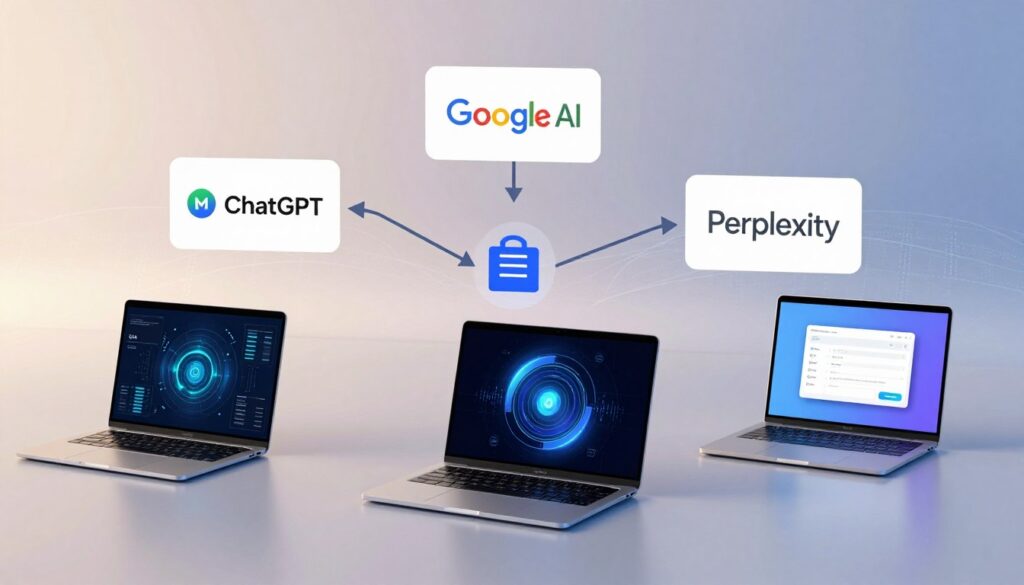
Zooming out beyond Google: where ChatGPT, Google AI Overviews, and Perplexity cite from
When you widen the lens beyond a single search engine, platform-level sourcing patterns become obvious. Different platforms favor distinct types of information and links. That matters for Indian B2B teams that need reliable visibility across multiple interfaces.
Top sources at scale: Wikipedia concentration versus Reddit-led platforms
Data show Wikipedia dominates one platform: it accounts for 7.8% of total volume and 47.9% of the platform’s top-10 share. Other platforms tilt to community feeds: Reddit is 6.6% on Perplexity and 2.2% in AI overviews.
Source concentration vs diversity: how “top 10 share” changes strategy
High concentration means marginal gains on a few sites can move the needle. If a platform pools citations around one or two leaders, align content and explainers with those sources.
Where overviews spread links more evenly, broaden distribution across formats—social posts, forums, and professional sites—to improve reach.
Domain signals that show up in citations: .com dominance and the role of .org
Top-level domains skew commercial: .com is 80.41% and .org 11.29% on one platform. That pattern implies that commercial and nonprofit domains drive much of the visible web evidence.
Practical takeaway: balance authoritative explainers, partner pages, and community engagement to match each engine’s sourcing pattern and boost cross-platform results.
Conclusion
Which domains appear in answers shapes how readers trust and act on information. Our Sept 2025 analysis shows a clear directional shift: branded domains (self and competitors) and neutral references (encyclopedic and academic) gained share, while industry publications, ecosystem partners, and forums lost relative share.
Across Aug 2024–Jun 2025 platform data, one overview favored Wikipedia volume while other overviews leaned on Reddit and community feeds. Neither system can independently verify facts, so links and source information remain the practical audit trail.
For research and high‑stakes decisions, use AI answers as a starting point, follow the links, and run a google search for breadth and recency. B2B teams should publish structured, attributable pages and keep community presence to signal authenticity.
Strategic goal: be the source that models and search engines cite for the natural language queries your users ask.