



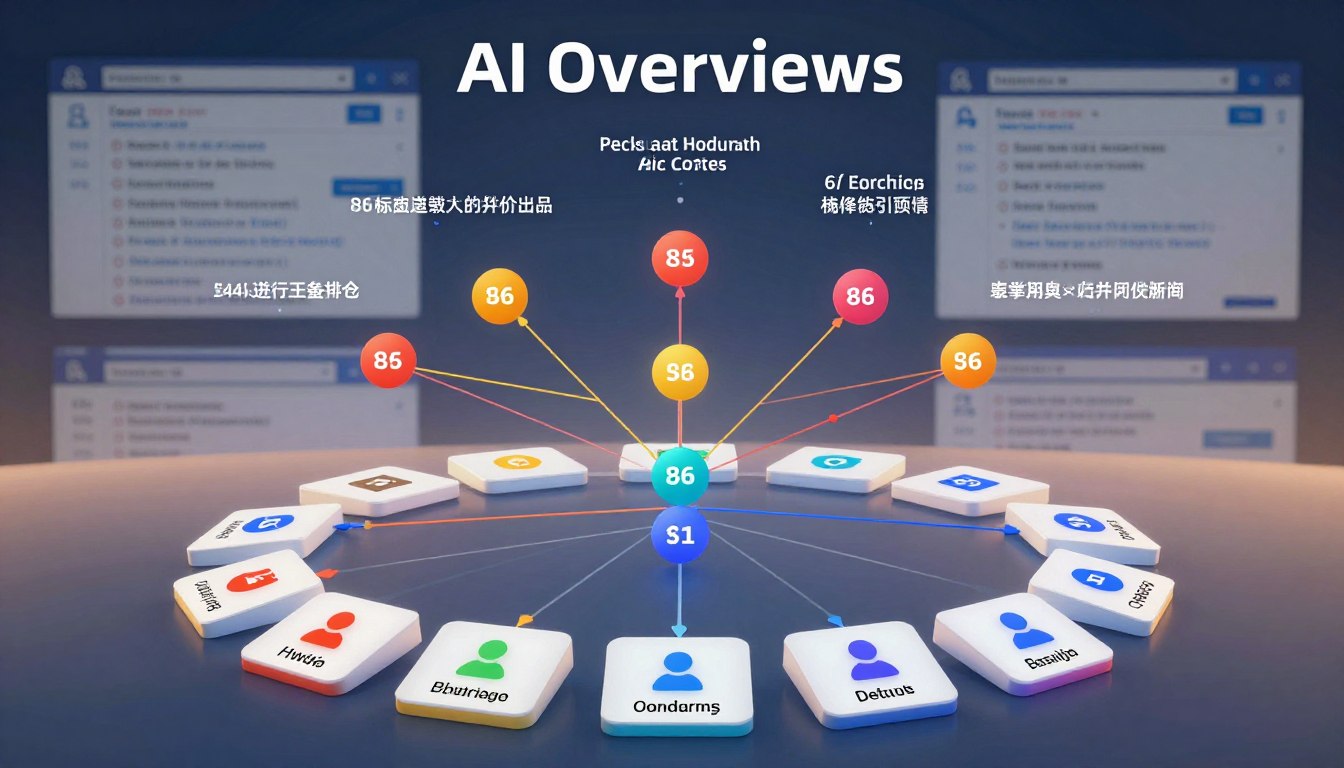


This report maps a volatility + consistency paradox that shows summaries above traditional search results rewrite fast, yet keep steady meanings.
Studies from Ahrefs Brand Radar and Semrush + Datos show frequent rewrites — average persistence of 2.15 days and pointwise shifts near 70% — while core answers and brand mentions stay stable.
For marketers in India, this shifts how we measure visibility. When generated answers sit atop the SERP, ranking alone loses power.
Being cited as a source becomes a competing layer of presence and influence. The practical issue is clear: fewer clicks for many informational queries, but higher brand lift when a brand is consistently source-worthy within overviews.
This article uses third-party data and focused analysis to define what “change” means here: text rewrites, structure shifts, citation rotation, and brand mention churn — not merely whether an overview appears.
Key Takeaways
- Overviews rewrite in days, creating new search volatility traditional trackers miss.
- Organic CTRs can fall significantly on informational queries; monitor assisted conversions.
- Track citations, sources, and brand mentions, not just rank positions.
- Prepare content and technical readiness so brands become reliable sources in overviews.
- Use study-backed metrics from Ahrefs and Semrush + Datos to guide measurement and action.
What Google AI Overviews Are and Why This Volatility Matters for Search Results
Google overviews are synthesized summary panels that sit above organic listings on the results page. They pull information from multiple sources to produce a single, concise answer. This differs from a featured snippet, which quotes one page directly.
That shift moves value from the classic rank + click model to an answer-first behavior. Users often get the information they need on the SERP and do not click through. For many queries this reduces organic CTRs, yet brands mentioned in the answer gain visibility and recall.
For Indian brands in fintech, health, education, SaaS, and D2C, the compression of real estate above organic listings matters. Even without visits, presence in an overview can boost later direct traffic and assisted conversions.
| Metric | Traditional SEO | Answer-first Layer |
|---|---|---|
| Primary KPI | Rank position | AI Share of Voice & citations |
| User behavior | Click to site | No-click discovery then recall |
| How to compete | Backlinks, on-page SEO | Clear, credible, machine-readable content |
Measurement must expand—track citations, brand mentions, and assisted conversions alongside classic SEO KPIs to reflect modern search realities.
Data Sources and Study Design Behind This Trend Analysis
Here we describe the panels, clickstream, and comparison logic that power the research. The goal was to combine deep per-query tracking with market-scale signals so Indian marketers can read practical results.
High-frequency keyword panel (Brand Radar)
The Brand Radar panel covered 43,000+ keywords with at least 16 captures per keyword across a month. This repeated observation approach shows how aios responses for the same query vary over time.
Market-wide monitoring (Semrush + Datos)
Semrush tracked 10M+ keywords and paired that with Datos clickstream. Subsets included 10K keywords for SERP features, 200K+ for zero-click trends, and 11K domains for industry visibility.
Consecutive pairs and pointwise analysis
We used “consecutive pairs”: for each keyword, we compared two sequential captures and counted whether the response differed. That ratio becomes the pointwise change rate.
- Why repeated observations matter: single snapshots understate real-world flux.
- How clickstream helps: it links SERP composition to actual clicks, separating presence from impact.
- Coverage balance: 43K deep-panel queries plus 10M+ broad queries give both depth and breadth.
Method limits: non-daily checks likely underestimate persistence and citation churn, so real volatility may be higher across the year.
AI Overviews changes: How Often Do Overviews Update?
Search summaries for common queries rotate far faster than most teams expect. Brand Radar measured a 70% pointwise change rate, and that drives fresh operational questions for planners in India.

Pointwise Change Rate
Pointwise change rate means the chance that two consecutive captures differ. A 70% probability means seven out of ten consecutive captures show a different overview text for the same query.
Average Persistence
Average persistence in the panel was 2.15 days. In practice, this implies an overview can rewrite multiple times per week for keywords you care about.
Note: Because captures were not daily, this 2.15-day figure likely underestimates true turnover. Missed intervals hide interim edits, so measured persistence is a conservative floor.
Refresh Effect and Practical Impact
Refreshing the SERP can yield a different overview within minutes. That “refresh effect” complicates reporting and stakeholder expectations and makes single snapshots unreliable for long-term claims.
- What volatility is not: it is not necessarily poor quality; it reflects multiple valid phrasings from overlapping sources.
- Tracking implication: monitor at multi-day cadence, not monthly, and track citations and assisted conversions alongside rank.
What Actually Changes Inside an Overview
Overview panels often reframe the same topic with different phrasing and structure across captures. This happens in two linked layers: the generated narrative and the evidence layer.
Text and structure
The generated narrative shifts in length, tone, and examples. An opening sentence can switch focus from definition to action. Lists may appear or vanish. This affects how your content is picked as a source for answers.
Citations and sources
Citations rotate frequently between captures. Many URLs show up in one run and are gone in the next. That rotation changes who gets credit in the search results, even when core information stays the same.
Why this matters for SEO: if your page matches only one narrow phrasing, you may miss citation opportunities when the overview reframes the question. Audit work should record not just rank, but whether you are cited, where you are cited, and which part of your content served as evidence.
Users see varied explanations across sessions, so repeated citation eligibility builds consistent brand presence more than a one-off inclusion.
Citations, Sources, and Brand Mentions Are Volatile
A single citation is a temporary badge, not a long-term guarantee of visibility. Brand Radar shows the average URL overlap between consecutive overview captures is 54.5%. In plain terms, nearly half of cited URLs can be replaced between two sequential runs for the same query.
URL overlap and the “one URL change” rule
If overlap is 54.5%, expect roughly “about one URL change per rerun.” That rule of thumb helps teams see why citation wins often feel fleeting unless you build broader authority.
Entities and brand mention churn
Entity overlap averages 54%. By entities we mean named brands, organizations, people, or places. This implies frequent rotation in which brands get explicit mentions. A brand mention today can vanish at the next update.
What this means for visibility and strategy
For Indian markets, a single citation signals eligibility but not permanence. Competitors can replace you quickly, even while traditional rank looks stable.
“Treat one-off citations as a signal to scale source signals across many queries and formats.”
- Interpretation: celebrate eligibility, not a final win.
- Tracking: aggregate AI Share of Voice and citation frequency over time.
- Action: focus on repeatable authority—structured content, reliable data, and broad coverage of queries.
The Paradox: Overviews Rewrite Constantly, but the Answer Stays the Same
Even when text and sources rotate, the core message users receive stays largely unchanged. Brand Radar measured semantic stability at about 0.95 cosine similarity between consecutive responses. That number means meaning holds steady even as wording and citations vary.
Semantic stability describes how similar two texts are in meaning. Cosine similarity is a simple vector measure: 1.0 means identical meaning; 0 means no relation. A ~0.95 score signals that two overviews can look different yet deliver the same answer and themes.
How consensus forms
Probabilistic models often converge on a consensus synthesis. Think of asking two subject experts who agree on facts but phrase them differently. The result is stable information backed by varying sources and citations.
Strategy and reporting implications
Your content goal is to be one of the trusted sources that support that stable consensus, not to chase every micro-variation in phrasing. Demonstrable authority—clear data, transparent methodology, and expert signals—wins citation eligibility.
- Productive metric split: separate text volatility from topic and intent coverage in reports.
- Content focus: optimize for durable information blocks and structured evidence rather than fleeting phrasing.
- On originality: original takes matter when tied to verifiable data or method, not merely contrarian wording.
“Text-level churn can be noise; intent-level stability is the signal marketers should track.”
Prevalence Trends: How Many Queries Trigger AI Overviews Over Time
Monitoring prevalence over time turns a fleeting SERP feature into a strategic signal for content planning.
Share and percentage trajectory through 2025
Semrush + Datos recorded a clear peak-and-pullback pattern. The share of queries showing summaries rose from 6.49% in Jan 2025 to 24.61% in Jul 2025, then eased to 15.69% in Nov 2025.
This percentage swing signals active rollout tuning. Google likely adjusts coverage by quality, risk, and user satisfaction. That iterative approach means growth is not linear.
What this implies for forecasting and portfolios
Treat prevalence as an early-warning KPI. Track the percentage of tracked queries that trigger summaries alongside ranks and impressions.
- Re-segment keyword lists by current aios presence and forecasted growth.
- Expect adjacent queries to be affected next quarter as coverage expands or retracts.
- Use prevalence data to model potential traffic shifts for Indian portfolios.
Prevalence alone isn’t the full story — intent mix and SERP composition decide real impact.
Intent Shifts and SERP Composition: Where AI Overviews Are Expanding Next
What started as an information layer is moving down-funnel. Semrush data shows informational aios share fell from 91.3% in January to 57.1% by October. At the same time, navigational aios rose from 0.74% to 10.33%.
Informational to commercial and navigational
This means fewer pure informational searches and more transactional and branded queries. When overviews summarize options or next steps, click distribution for high-value categories shifts. That has clear impact on revenue and attribution.
Navigational risk to brands
As navigational overviews grow, branded queries can be answered on the SERP before a user reaches the site. Protect official pages—about, pricing, support—so your domain becomes the preferred evidence source for a given query.
SERP stacking and features
Related searches (95.32%) and People Also Ask (90.03%) commonly co-occur with overviews. Forums and video carousels add off-site signals, often from Reddit and YouTube, that compete with organic listings.
Ads appearing with overviews
Ads now show on about 25% of AIO SERPs, up from under 1% earlier in 2025. The result: a more “paid + answer” page that reduces pure organic real estate across board.
| Metric | Jan 2025 | Oct 2025 |
|---|---|---|
| Informational aios share | 91.3% | 57.1% |
| Navigational aios | 0.74% | 10.33% |
| PAA overlap | — | 90.03% |
| Related searches overlap | — | 95.32% |
| Google Ads presence | <1% | ~25% |
“Plan for multi-format authority: on-site structure plus off-site presence where SERP features pull content.”
Impact on Visibility: CTR, Zero-Click Behavior, and What Marketers Should Measure
Visibility now depends as much on being quoted in the summary as on classic top rankings. One analysis reported organic CTR drops up to ~61% on informational queries with aios in place. That benchmark shows the potential impact on traffic, but the effect varies by industry and intent across India.

CTR risk and zero-click nuance
CTR risk: When an overview appears, clicks to organic listings can fall fast. For informational topics, expect uneven drops that differ by query class and SERP layout.
Zero-click nuance: Semrush + Datos found keywords with aios have a higher baseline zero-click rate, yet before/after comparison showed a decline from 33.75% to 31.53% after aios introduction. In short, many affected searches already trended toward fewer clicks.
What to measure in India
Shift KPIs from sessions alone toward brand exposure and evidence of influence. Track these metrics:
- AI Share of Voice across priority queries.
- Citations count and stability over time.
- Brand mentions rate and accompanying sentiment.
- Assisted conversions linked to branded search lift.
Instrumentation principles
Annotate when aios appear for priority queries. Segment reports by intent (informational, navigational, transactional). Track trends over time and use these signals to decide which pages need restructuring for citation eligibility and which themes need authority-building campaigns.
“Measure exposure, not just sessions; brand citation eligibility is the new visibility lever.”
What to Do Next: AI-First SEO and Content Strategy for Source-Worthy Presence
Start by treating citation eligibility as a design goal, not an afterthought. Place concise answer blocks near the top of pages so machines and readers find the core point fast. Use clear
/
structure, short paragraphs, and TL;DR summaries that map to common queries.
Optimize for citations and clarity
Optimize for citations and clarity
Build modular answer blocks: definitions, steps, comparisons, and short lists that are easy to excerpt. Use tables for specs or pricing and FAQs that mirror user phrasing.
Use structured data for machine readability
Implement Article, FAQ, HowTo, Dataset, and Organization/Author markup by page type. This reinforces credibility signals and helps search systems pick your page as a reliable source.
Build authority around themes
Win the topic, not the single keyword. Create clusters that cover the consensus topics your audience searches. Publish original data and get cited by reputable Indian and global publications to boost off-site signals.
Set up AIO-aware tracking workflows
Monitor which keywords trigger aios, log citations and brand mentions, and set alerts for sudden inclusion or exclusion. Review shifts at least weekly given ~2-day persistence.
“Measure citation eligibility and exposure, not just clicks.”
- On-page blueprint: compact answer at top, clear headings, extractable lists.
- Formatting patterns: TL;DR, bullets, short paragraphs, and tables.
- Outcomes: stronger visibility in search results, improved assisted conversions, and protected brand presence.
Conclusion
Search summary panels rewrite often—about a 70% chance between captures and ~2.15 days of persistence—yet the core answer stays stable. Semantic similarity sits near 0.95 even as URL overlap (~54.5%) and entity overlap (~54%) rotate.
The prevalence curve peaked at 24.61% in Jul 2025 and settled near 15.69% by Nov 2025, showing tuned rollout not steady growth. Navigational intent rose to 10.33% by Oct 2025 and ads now appear on ~25% of these SERPs.
Practical guide: treat visibility as layered—track overview presence, citations, brand mentions, and classic clicks. Invest budget in durable credibility: structured content, clear data, and strong entity signals so your brand wins source status across search results.