




This 2025 trend analysis examines who gets cited inside Google’s conversational layer and why that matters for discoverability in India and beyond.
The report tallies top citation leaders: Wikipedia (1,135,007 mentions, 11.22%), YouTube (961,938; 9.51%), blog.google (601,835; 5.95%), Reddit (588,596; 5.82%), and Google.com (568,774; 5.62%).
Mentions and citations still build brand presence inside answers even as clicks fall. A name in a reply can end the user journey, so visibility within replies affects awareness more than referral traffic alone.
Concentration is steep: the top five capture 38.13% of all citations, top ten 53.87%, and top twenty 66.18%. This shows a winner-takes-most gradient for major platforms and Google-owned properties.
We focus on domains, not single pages, to help marketers prioritize partnerships, format choices, and distribution strategy. Later sections analyze a September 2025 volatility event, platform personalities, and practical monitoring steps.
Key Takeaways
- The top five sites account for over 38% of mentions, concentrating visibility.
- Major platforms and Google-owned properties get elevated exposure in search replies.
- Mentions inside answers build brand presence even when click-through drops.
- This report interprets 100 most cited domains to guide publisher strategy.
- Expect later sections on a September 2025 volatility event and optimization tips.
Why Google’s AI Mode citations matter for search visibility in 2025
The shift to answer-first experiences means many users see a concise summary before they click. This change alters what counts as visibility and how marketers judge success.
From search engine to answer engine and the rise of zero-click behavior
Overviews expanded from 6.49% of searches in January 2025 to over 50% by October. That growth reduces downstream traffic because summaries satisfy intent on the results page.
What a citation signals about authority, trust, and source preference
A cited source acts as a visible trust cue. Even when users do not click, repeated mentions shape brand recall and perceived authority.
| Metric | 2024 | May 2025 |
|---|---|---|
| Zero-click rate | 56% | 69% |
| Searches with overviews | 6.49% (Jan 2025) | 50%+ (Oct 2025) |
| CTR change for #1 result | — | -34.5% (Ahrefs) |
Practical baseline: understand which sources win mentions, why they are chosen, and how that affects visibility planning for Indian publishers and marketers.
How this report measured AI citations across engines and time
We describe the sampling, snapshot cadence, and counting rules used to quantify source mentions over time.
Dataset scope: the study sampled 230,000 prompts across three conversational engines and captured 13 weekly snapshots from July 14 to Oct 12, 2025. The raw collection yielded over 100 million total citations.
Method and measurement
The unit of measurement was a citation appearing inside a response. Each instance was logged and then aggregated by domain to show recurring sources.
Why compare multiple platforms? Different engines use distinct retrieval systems, policies, and ranking signals. Comparing platforms reveals how source share shifts with those differences.
- Weekly snapshots capture volatility rather than a single-day snapshot.
- Top cited domains means the sites most frequently included as sources in responses.
- Share equals the proportion of responses containing a citation from a given site.
| Metric | Value | Notes |
|---|---|---|
| Prompts sampled | 230,000 | Large-scale prompt sampling |
| Weekly snapshots | 13 | Jul 14 — Oct 12, 2025 |
| Total citations logged | 100,000,000+ | Aggregated across engines |
| Unique sites (Perplexity) | 8,027 | Higher domain diversity |
| Unique sites (ChatGPT Search) | 2,127 | More concentrated |
Interpretation guidance: the data shows patterns and correlation, but not direct causation. Platform-level diversity affects opportunity for smaller publishers. For Indian marketers, time-series tracking helps spot temporary boosts or sudden drops caused by tuning, filtering, or retrieval changes.
AI Mode citation domains: the 100 most cited domains and what the leaders reveal
A compact map of the 100 most cited sites reveals which sources shape answers across many queries.
What the top 100 represents: a practical guide to the sites most likely to be selected as sources inside reply text. For Indian publishers, this list is a useable map of where visibility tends to cluster.
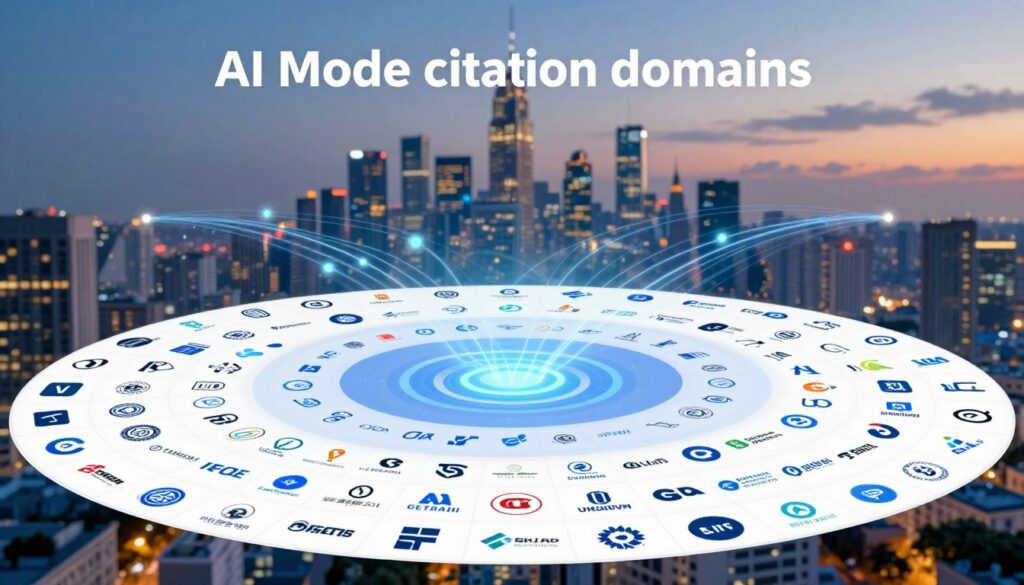
The concentration effect: a very small set captures a large share. The top five account for 38.13% of mentions, the top ten 53.87%, and the top twenty 66.18%. That skew changes strategy: broad reach matters less than being reference-ready.
The leaders share common advantages: well-structured reference pages, huge user-generated archives, and strong brand signals that act as trust shortcuts. Wikipedia, YouTube, blog.google, Reddit, and Google.com top the list by sheer share and repeat mentions.
| Rank Group | Share | Notable leaders |
|---|---|---|
| Top 5 | 38.13% | Wikipedia, YouTube, blog.google, Reddit, Google.com |
| Top 10 | 53.87% | Includes LinkedIn and other major platforms |
| Top 20 | 66.18% | Broad mix of structured references and UGC sites |
- Why they win: scalable coverage, clear structure, and formats models can summarize easily.
- Recurring patterns: reference entries, video libraries, high-volume forums, and professional networks.
- Practical lens: copy attributes that fit your niche—structured data, consistent quality, and visible branding beat blind imitation.
Google’s owned-and-operated advantage inside AI Mode and AI Overviews
Google’s family of properties now appears as a repeat reference inside many overviews. That pattern changes which pages get follow-up attention after a user reads a short answer.
Scale of the effect: YouTube, blog.google, Google.com and other Google properties account for 2,306,551 mentions, or 22.81% of the total in the study. Separately, 43% of overviews include links that send users back to Google-controlled sources such as support.google.com, play.google.com, and YouTube.
Self-referential patterns
This self-reference has practical consequences. Even when a third-party page is the best match, the engine layer often nudges users toward Google properties for deeper info or follow-ups.
“A persistent preference for owned sources shifts attention and reduces outbound clicks.”
How this reshapes competition
- Owned citations raise the bar for independent websites to earn visible mentions.
- Search economics shift: fewer outbound clicks, more retained attention, and reinforced product use.
- Publishers should treat YouTube and blog.google as distribution channels as well as competitors.
| Metric | Value | Implication |
|---|---|---|
| Google ecosystem share | 2,306,551 (22.81%) | Large structural advantage in overviews |
| Overviews linking back to Google | 43% | Frequent self-referential follow-ups |
| Publisher action | Prioritize platform use | Use YouTube and Google formats for distribution |
Next step: monitor how tuning and retrieval changes shift these shares. Even dominant preference can vary fast, so weekly tracking matters for India-focused publishers.
Citation volatility trends and the September 2025 inflection point
A sharp mid-September shift exposed how quickly citation patterns can flip across conversational systems.
What changed: ChatGPT reduced mentions of Reddit and Wikipedia in mid-September 2025. Reddit fell from ~60% of responses in early August to ~10% by mid-September. Wikipedia fell from ~55% to under 20% on ChatGPT.
The num=100 theory: some observers linked the change to Google removing the num=100 parameter around Sept 11. That could limit access to deeper search results, but correlation is not causation.
Why that theory may not fully explain the shift
Sergei Rogulin of Semrush noted only ~34% of Reddit’s ranking keywords are in positions 21–100. The distribution suggests de-biasing or source filtering is a more plausible cause than a single parameter change.
| Metric | ChatGPT | AI Mode | Perplexity |
|---|---|---|---|
| Wikipedia mentions | 55% → <20% | ~3% | ~0.8% |
| Reddit mentions | ~60% → ~10% | stable/up | slight down |
| Post-shift winners | PRnewswire, Forbes, Medium | YouTube, Reddit, Facebook up | Forbes, Microsoft slight up |
Interpretation: platforms can tune retrieval and filters quickly. For Indian marketers this means monitor citation patterns over time and diversify where you seek visibility.
Platform-by-platform citation patterns and “engine personalities”
Each engine develops a predictable sourcing personality that affects which sources win visibility. That personality shapes how balanced or concentrated the share of references becomes across the platforms publishers care about.
Google mode: balanced sourcing and steady mix
Google mode shows a stable mix. Weekly sampling found recurring sources like LinkedIn, YouTube, Reddit, and Google Blog. This platform favors a broad pool and less volatile shifts than some competitors.
ChatGPT: concentrated sources and bigger swings
ChatGPT leans on fewer sources and reacts faster to tuning events. The September 2025 swing showed how quickly its share can re-weight toward new winners. Brand mentions in commerce prompts were especially concentrated (BrightEdge: ~99.3% of eCommerce responses).
Perplexity: diversity and transparency
Perplexity cited 8,027 unique domains in the study, the highest among platforms. It offers richer citation detail and a wider pool of sources, which helps niche publishers earn occasional visibility.
Overviews vs interactive mode
Overviews on search results pages handle intent differently from the interactive flow inside a conversational mode. Overviews skew more toward video links (YouTube accounted for 62.4% in some cuts) while interactive sessions may surface a broader set of supporting sources.
- Define engine personalities as consistent platform behaviors that shape source mix.
- Plan for platform differences rather than a single playbook.
- Practical takeaway: prioritize platforms with higher transparency when trust and verification matter, while keeping presence in Google mode for scale.
| Platform | Characteristic | Notable metric |
|---|---|---|
| Google mode | Balanced, stable | LinkedIn/YouTube/Reddit recurring |
| ChatGPT | Concentrated, volatile | 2,127 unique domains (more concentrated) |
| Perplexity | Diverse, transparent | 8,027 unique domains (most diverse) |
Brand mentions, domains, and content types that earn citations in AI responses
Purchase-intent queries — words like “best,” “budget,” “compare,” and “deals” — routinely prompt brand lists and product calls in short answers.
When brands appear
BrightEdge shows a clear trigger pattern: prompts with buying intent spike brand mentions. ChatGPT-style systems returned brands in 99.3% of responses (avg 5.84 brands/response). Google overviews include brands far less often (6.2%, avg 0.29).
Content formats that earn trust
User-generated threads, concise video explainers, dictionary entries, and medical authority pages appear frequently as sources. Review sites also score reliably because they bundle verdicts, schema-like structure, and aggregated opinion.
“Review pages succeed because they give clear verdicts and structured signals machines and people can use.”
| Format | Why it wins | Typical use |
|---|---|---|
| UGC threads | Real experience, high signal | Pros/cons and tips |
| Video explainers | High engagement, favored by overviews | How-to and demos |
| Reference sites | Authoritative facts, E-E-A-T weight | Definitions and medical info |
- Create citation-ready comparison blocks, short recommendation summaries, and pros/cons tables on product pages.
- Pair on-site content with presence on trusted review and reference sources to match platform preference.
- Track which content types earn mentions per platform and tailor hubs around those formats.
What the citation hierarchy means for Indian marketers and publishers
Mobile-first discovery in India magnifies the effect of top-cited sites on search visibility.
On phones, overview blocks sit above the fold. That pushes traditional links down and can cut click-through rates even when rankings remain steady.
Why this matters for brands: users often get answers instantly and skip clicking. For many Indian brands, this reduces traffic and lead flow despite maintaining search rank.
Where Indian brands can win
Focus on niche authority. Build deep, expert-led pages for high-intent categories like fintech explainers, telecom plan comparisons, local travel logistics, and regulated health content.
Localized signals help: INR pricing, city/state details, and Indian English phrasing create unique value that global sites rarely match.
Partnership and distribution strategies
- Earn mentions on trusted sites by contributing expert quotes, co-authored research, and licensing-friendly data.
- Target industry associations, major publishers, and quality community sites that the platform layer already cites.
- Use short, citation-ready assets—FAQs, tables, and data snippets—to increase the chance of being referenced.
Measurement and next steps
Track India-focused query clusters weekly. Include Hindi-influenced English, “near me” modifiers, and price-sensitive searches to detect where overviews displace results.
“Diversify presence beyond your own websites and seek mentions on high-trust sites to protect visibility.”
How to track and optimize for AI citation share (without chasing vanity rankings)
Set up a weekly watch to catch shifting source mixes before they affect traffic. A short, repeatable cadence turns noisy shifts into clear signals you can act on.
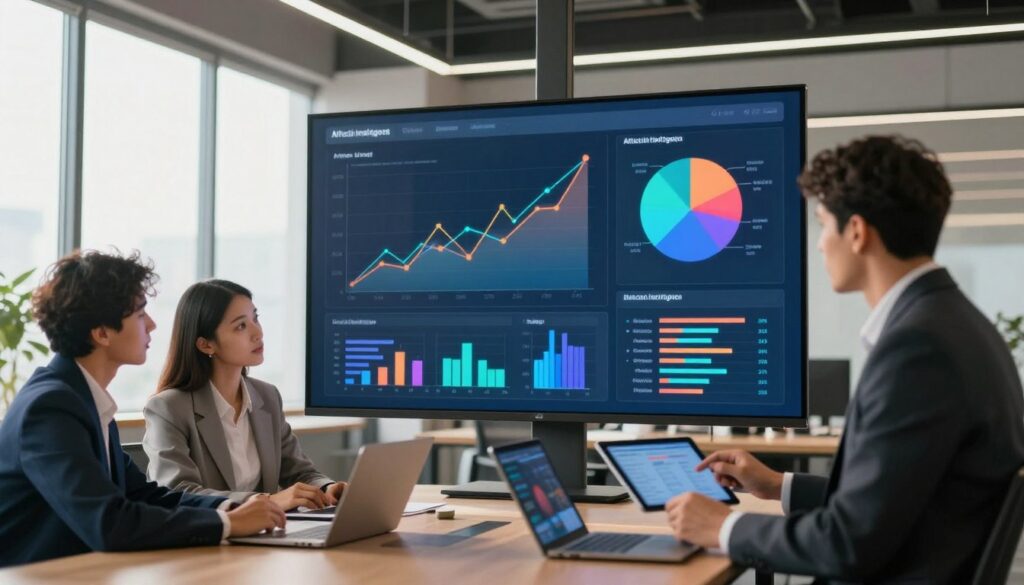
Monitoring: build a weekly citation dashboard
Track citations by engine, by query cluster, and by top and long-tail queries. Use consistent prompt sets and repeatable exports so week-to-week changes are comparable.
Optimization: E-E-A-T, structured data, and citation-ready blocks
Publish crisp definitions, step-by-step procedures, and expert quotes with bylines. Add Organization, FAQ, HowTo, Product, Review, or MedicalWebPage schema where relevant.
Defensive strategy: diversify engines and source types
Do not rely on one engine. Keep presence in google mode and Perplexity plus search-style engines. Spread content across reference pages, short videos, and community threads.
Opportunity mapping: find the long tail
Map specialized sites that earn 48–77% of citations in niches. Outreach, data-led PR, and quotable snippets help you earn mentions on those sites and protect visibility.
“Monitor weekly, optimize content for machines and people, and diversify where you seek mentions.”
| Task | Why it matters | Quick step |
|---|---|---|
| Dashboard | Spot shifts fast | Weekly snapshots, alerts |
| Schema | Improve machine readability | Apply relevant structured data |
| Long-tail mapping | Unlock steady citations | List niche sites and pitch data |
Conclusion
Conclusion
This report shows search discovery now depends on both rank and who gets quoted inside answers. Growth in answer-first results, heavy concentration among a few sites, and a clear Google advantage mean citation share is a core visibility KPI alongside classic rankings.
High mentions do not guarantee clicks, so teams must track on-SERP presence and downstream metrics. Use the “100 most cited” lens to see which domains earn trust, then reverse-engineer the content and distribution traits that match them.
Act now: monitor weekly, optimize content for extractable snippets, and diversify where you seek mentions. Focus on niche websites and expert pages—those long-tail opportunities let Indian brands win with tight information architecture. Build a repeatable tracking workflow and prioritize a short list of target domains and content upgrades for the next quarter.