





Marketers in India often ask whether Google’s two result experiences are simply the same answer dressed differently. We studied 730,000 response pairs to move past anecdote and spot real patterns in search behavior.
Key findings show the two features reach similar conclusions about queries (86% semantic match) but they cite different sources only 13.7% of the time. One experience also returns much longer text—about four times the length—than the other.
This piece explains when each object appears in search results, how overviews change discovery, and what our large-scale data measured. It ties results to practical seo choices for brands in India, so you can plan whether to treat these as one optimization effort or two separate channels.
Key Takeaways
- 730K pairs reveal high semantic overlap but low citation overlap between the two experiences.
- One format tends to be far longer; length affects which pages get cited.
- Search visibility can shift even when rankings stay stable.
- Optimize content and citations to win mentions in both experiences.
- The study is observational and grounded in documented guidance and large-scale data, not speculation.
Why AI Mode and AI Overviews matter for SEO and visibility in Google Search
Search pages that synthesize answers change how people begin research and how brands get discovered. For many users this means fewer clicks on traditional search pages and more direct answers on the results page.
What shifts for users? Quick fact-finders want instant clarity, while exploratory users follow threads, compare options, and ask follow-up questions. One format serves fast, single-step queries; the other supports multi-step research and deeper comparisons.
That change alters SEO outcomes. Ranking in the classic ten-blue-links view still matters for organic traffic and indexing. But being cited or mentioned in a synthesized answer creates a parallel layer of visibility that drives referrals and brand reinforcement.
Operationally, citations and sources are now direct pathways to referral traffic. Brands that appear in summaries shape consideration sets for comparison questions. Mentions can act like micro-recommendations.
Measurement and next steps
Search Console pools performance, so these experiences can hide channel differences. Treat them as separate channels in reporting and adapt strategies to win both citations and classic rankings. The rest of this article shows practical steps without abandoning traditional seo fundamentals.
What AI Overviews are and when they appear in search results
Search overviews give a short, curated summary so users can quickly decide whether to dig deeper. They synthesize key points from multiple pages and often include supporting links for further reading.
Designed for quick synthesis and a jumping-off point
Overview panels act as a compact answer and a gateway. They pull concise facts, short explanations, and a few source links into one view.
That layout reduces research friction: a user scans the summary, then follows curated links for detail. For complex topics, overviews speed discovery and shape which pages get clicked.
Why overviews don’t trigger on every query
Google shows these summaries only when they add value beyond classic results. Simple navigational or transactional queries usually do not trigger an overview.
SEO implication: you cannot expect an overview for every high-volume keyword. Focus content planning on informative queries that benefit from synthesis. Make pages snippet-ready and quotable so they are eligible to be cited when an overview does appear.
Because triggers vary, direct comparison with other result experiences requires capturing both outputs for the same queries to see how they differ in sources and wording.
What Google AI Mode is and how “overviews mode” differs from a classic SERP
Google’s conversational search lets people refine queries in‑session, turning single questions into short research threads. In this setup, the interface supports follow-up prompts and layered answers rather than a one-shot result list.
Conversational exploration, follow-ups, and deeper comparisons
Define google mode as a more conversational, search-driven interface where a user asks nuanced questions and refines intent during the same session. It encourages stepwise reasoning and long-form responses with supporting links.
By contrast, overviews mode gives a compact synthesis on top of the classic SERP. Instead of scanning many blue links, users see a summarized answer with source links as evidence. That changes how people discover and trust content.
Where this fits alongside traditional SEO
Operationally, mode can keep users inside a dialogue longer and shift clicks toward fewer, proof-oriented visits. Indexing, snippets, and authority still matter for visibility in both experiences, but the interface alters which pages surface as supporting links.
- Expect citation variance: different model choices and techniques may produce different mode overviews and citations for the same query.
- Marketer takeaway: aim to be a high‑confidence supporting source and an entity worth mentioning in comparisons.
Next: the study design explains how 730K paired responses were analyzed to measure similarity, citation overlap, and brand behavior.
AI Mode vs AI Overviews: what the 730K-response study analyzed
We captured matched outputs for hundreds of thousands of queries to move beyond anecdotes and measure real behavior.
Dataset snapshot and scope
The analysis used September 2025 US data from Ahrefs’ Brand Radar. In total, 730,000 paired responses were collected for content similarity. A subset of 540,000 query pairs supported citation and URL overlap checks.
How citation overlap and URL overlap were measured
Citation overlap counts the percentage of identical cited URLs that appear in both outputs for the same query. We also tracked top citations to see which links surfaced first.
How word-level overlap and semantic similarity were calculated
Word overlap used Jaccard similarity: shared unique words divided by total unique words. This shows why paraphrases can score low.
Semantic similarity used cosine similarity on vectorized text (0–1). Higher cosine scores mean the two responses agree in meaning despite different wording.
How entity overlap and brand mentions were counted
Named entities — people, organizations, and brands — were extracted and compared across each pair. Entity overlap reports how often the same brands or people are mentioned.
Why single-generation snapshots can understate citation variability
Prior work shows about 45% of overview citations can change between generations. A single snapshot therefore understates real-world variability, but low overlap still signals different source-selection behavior.
- Why this matters: these metrics map directly to whether your pages and brands get cited in synthesized answers.
Answer length and response structure: why AI Mode outputs are longer
A longer output gives the system space to unpack a question into several mini-answers. That expansion changes how content is used and which pages become supporting sources.
What “four times longer” looks like in practice
On average the longer responses are roughly four times the word count of short summaries. Practically, that means multi-part sections, side-by-side comparisons, and step-by-step guidance appear more often.
Longer replies also include more named entities. Our data shows about 3.3 entities per long response versus 1.3 in short summaries. That increases competitive density for brands and expert sources.
How length changes optimization priorities for marketers
Length creates surface area. Longer text covers extra subtopics and caveats, so one page can be cited multiple times for different mini-answers.
Practical takeaways:
- Structure content with clear subheadings and scannable lists to match multi-part responses.
- Offer concise “mini-answers” that can be quoted or extracted as supporting evidence.
- Build broad source distribution—longer outputs don’t guarantee shared citations.
| Metric | Short Overview | Long Response | SEO Impact |
|---|---|---|---|
| Average length | ~100 words | ~400 words | More opportunities to be cited across subtopics |
| Entities per item | 1.3 | 3.3 | Higher brand competition inside one reply |
| Structure | Single summary | Multi-section with lists | Favor well-organized, scannable pages |
| Optimization focus | Snippet-ready lines | Comprehensive sections and mini-answers | Shift from exact phrasing to semantic authority |
Do not chase word-for-word inclusion. Systems rarely reuse exact phrasing. Instead, aim for comprehensive, well-structured content that a user or an expert would cite across several subtopics. Longer responses reward a content strategy built on clarity and breadth rather than copy-paste snippets.
Citations and sources: why the overlap is only 13.7%
A strikingly low share of shared citations—just 13.7%—means the two systems often rely on different web pages for the same question. Top-3 citation overlap is slightly higher at 16.3%, which implies about 87% of the time the cited pages differ completely.
What low citation overlap means for brand visibility
Low overlap reduces the chance that being cited in one experience will carry over to the other. Your brand can win visibility in one result yet be absent in the other.
That split matters for demand capture: top cited pages drive trust and clicks, so missing those positions changes referral patterns over time.
Top-citation overlap vs full-citation overlap
Top-citation overlap measures shared links in the highest positions. These drive the most engagement.
Full-citation overlap covers all supporting links. Marketers should aim to own both top positions and a spread of credible pages.
When citations go missing in search results
One system has no citations about 3% of the time; the other lacks them about 11% of the time. Missing citations occur for math, sensitive topics, redirects to help centers, or unsupported languages. Those cases make attribution and measurement harder.
- Causes of divergence: different retrieval methods, differing model behaviors, and distinct rules for selecting supporting links.
- Action: widen your digital PR and publish multiple credible pages so one can be selected as a source.
- Tools: use monitoring platforms and Search Console to track which URLs are cited and where gaps appear.
Domain and content-type preferences in AI Mode vs AI Overviews
Different platforms steer which sources appear as evidence in synthesized search results. These preferences matter because they change which pages and brands gain visibility for the same query.
Video and community platforms in overviews
Overviews cite YouTube most often, and they also surface community sites for experiential queries. Video excels for how-to and explainer searches where demonstrations help people decide quickly.
That makes a strong video presence a tactical tool. Core pages like home or category listings also show up more in overviews, which favors brand-level navigation and quick entry points.
Encyclopedic and health sources in mode
Mode pulls more from encyclopedic and medical sites. Wikipedia appears roughly 10% more in mode citations, while health domains are cited nearly twice as often.
These sources add perceived authority for long, grounded responses. Quora and Facebook are also more visible in mode, signaling a tilt toward conversational or community-lens content during deeper exploration.
Article-format dominance and where core pages show up
Despite platform differences, plain-text articles remain the dominant format across both experiences. Editorial pages still win most citations, reinforcing the need for well-structured written content.
Content planning: invest in strong editorial articles, maintain a relevant YouTube presence where helpful, and engage in selective community participation to broaden your brand’s chance of being cited.
| Preference | Overviews | Mode | SEO implication |
|---|---|---|---|
| Top domains | YouTube, core pages | Wikipedia, health sites, Quora | Mix media and authoritative pages |
| Format tilt | Video, brand home/category | Encyclopedic, community posts | Match format to query intent |
| Article presence | High | High | Maintain editorial pages for both |
| Brand signals | Homepage visibility | Expert and community mentions | Balance brand pages and expert content |
Word-level overlap is low: why these aren’t just the same answer rewritten
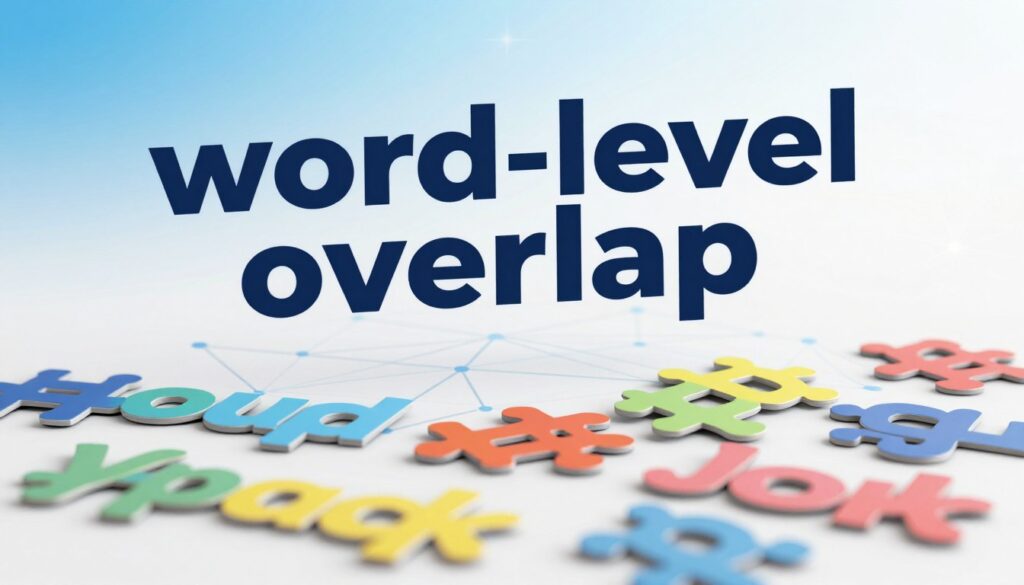
Jaccard checks show a mean score of 0.16 — only 16% unique-word overlap. That level means the two responses are largely newly composed, not simple rewrites or trimmed copies.
What a 0.16 Jaccard similarity implies
A 0.16 score means shared wording is rare. Even when the meaning matches, the literal words differ enough that templated lines seldom carry over between systems.
Why identical openings are uncommon
Exactly the same first sentence appears in just 2.51% of pairs, and fully identical responses happen only 0.51% of the time. That shows generic intros and boilerplate lines are unlikely to be extracted reliably.
SEO takeaway: optimize multiple quotable passages across your pages. Focus on clear, factual content and short, snippable statements in several sections instead of banking on one perfect paragraph.
- Low word overlap can coexist with high semantic match; meaning may align while wording differs.
- Keep language simple and localize for India, but prioritize structure and clarity over chasing exact phrasing.
Semantic similarity is high: how both systems reach similar conclusions
Both systems often land on the same practical recommendation even when their wording and sources differ.
Semantic similarity measures meaning rather than exact words. Low word overlap can coexist with high semantic agreement. In other words, two outputs can use different phrasing and still point to the same information and actions.
What an 86% cosine similarity reveals about intent
The average cosine score of 0.86 indicates strong intent alignment. Nearly 89.7% of response pairs scored above 0.8, so for most queries the underlying model maps the same user intent to similar topics and recommended steps.
How often responses strongly agree even with different wording
That high agreement means the core answer is stable across results. For seo, this is good news: topical authority and depth matter more than copying exact phrasing from one output.
- Action: focus on clear headings and evidence-based sections.
- Prioritize: consistent facts, citations, and structure so your pages satisfy intent.
- Note: sources and entities can still diverge, affecting who gets the visible citations.
| Metric | Value | SEO implication |
|---|---|---|
| Average cosine similarity | 0.86 | Strong topic alignment across systems |
| Pairs >0.8 | 89.7% | Core answers are stable for most queries |
| Word overlap (Jaccard) | 0.16 | Wording differs; optimize multiple quotable passages |
Query fan-out explained: how AI Mode and AI Overviews can agree but cite different links
Query fan-out is an operational retrieval step where a single question spawns several related searches to gather evidence across topics.
The process runs parallel searches that target subtopics and varied sources. Each mini-search pulls candidate pages that support parts of the answer.
How fan-out expands searches across subtopics and sources
Fan-out broadens the search horizon by asking focused sub-queries for pricing, security, or how-to details. This uncovers pages that are strong on one subtopic but weak on another.
Why different models and techniques produce different supporting pages
Separate systems can use distinct retrieval models, freshness signals, or ranking heuristics. Those differences change which pages get surfaced from the fan-out pool.
- Link diversity: subtopic expansions surface varied citation candidates, raising odds that different systems cite different pages.
- Study tie-in: this behavior helps explain the study’s 13.7% citation overlap—retrieval sets differ even when conclusions match.
- Practical example: a “best cloud storage” query may fan out to pricing, security, and collaboration—each sub-query yields different citation candidates.
| Aspect | Fan-out effect | Why systems differ | SEO action |
|---|---|---|---|
| Scope | Multiple sub-searches | Different retrieval choices | Build hub-and-spoke content |
| Source pool | Broader candidate set | Format & freshness priorities | Publish varied formats (pages, videos) |
| Citation outcome | High link diversity | Distinct ranking signals per system | Be findable across subtopics |
SEO implication: occupy multiple nodes of the topic graph so fan-out searches can find your content. Fan-out also widens which brands and people are eligible to be mentioned as authorities in answers.
Brands, entities, and competition: who gets mentioned and why it’s uneven
Brands and named people show up unevenly across the two synthesized result formats, and that split changes who gains real-world attention.
Entity expansion in longer responses
Longer replies introduce more examples and expert names as options, comparisons, or validation. On average these responses include 3.3 brand and people mentions versus 1.3 in short summaries.
This expansion means a single response can cite multiple vendors, experts, and guides. A brand listed in a short summary often appears again, but alongside more competitors.
What 61% carryover means for a cited brand
If your brand appears in a short summary, there is a meaningful chance the longer response will include it too. The longer reply keeps existing mentions 61% of the time and then adds other names.
“Being cited once raises the odds of more exposure, but it rarely guarantees exclusivity.”
Why many responses list no brands or people
About 32.8% of all responses mention no person or brand. Short summaries skip names even more: 59.41% have no brand mentions versus 34.66% in longer replies.
Simple informational queries — dates, definitions, or pure facts — rarely invite brand examples. That limits brand-led tactics for those user intents.
Practical takeaway for India-focused marketers
Be a safe, credible source to mention. Focus on clear positioning, trust signals, and widely cited content so users and systems can pick your pages as evidence.
| Aspect | Short summary | Long response |
|---|---|---|
| Average mentions (brands/people) | 1.3 | 3.3 |
| % with no names | 59.41% | 34.66% |
| Carryover when cited | 61% of short-summary mentions appear again in longer responses | |
Next, we translate these patterns into an optimization and measurement plan that treats both surfaces as distinct results for tracking and growth.
Optimization and content strategy: how to win visibility in both systems
Winning mentions on both synthesized search experiences means planning for different citation paths, not copying one playbook. Treat each surface as a separate channel and measure them separately.
Treat them as distinct channels with separate tracking
Set up two reporting views: one for citation mentions and one for classic rankings. Use Search Console for aggregate performance and add third‑party tools to monitor citations and brand mentions where available.
Build semantic authority, not exact-match wording
Create hub-and-spoke content that covers intent and subtopics. Clear headings, mini-answers, and quotable bullets make your pages easier to extract as sources.
Match format to platform preferences
Invest in strong article pages and publish short YouTube explainers for discovery. Participate in select community forums to broaden source signals.
Strengthen E-E-A-T and technical eligibility
Show firsthand experience and expert review for sensitive topics. Ensure crawlability, indexing, and snippet readiness. Use governance controls—nosnippet, max-snippet, and noindex—thoughtfully, and evaluate Google-Extended if you need further limits.
Study tie-back: because longer outputs expand entity competition and citation overlap is low, diversify the pages and domains that can represent you.

| Focus | Action | Why it matters |
|---|---|---|
| Measurement | Search Console + citation monitoring tools | Low overlap means one view misses exposure |
| Content | Hub-and-spoke, mini-answers, video support | Fans out across subtopics and formats |
| Trust & tech | Expert review, transparent sources, snippet readiness | Improves eligibility and citation likelihood |
Conclusion
The study shows two distinct retrieval paths that often agree on meaning but choose different supporting pages. Semantic similarity is high (about 86%), yet wording and sources diverge. That matters for how your brand is found.
Three metrics to keep in mind: outputs can be ~4x longer, citation overlap is low (~13.7%), and responses match in meaning (~86% semantic similarity).
For SEO in India, treat these surfaces as separate channels. Track citations and classic rankings independently, broaden topic coverage, and diversify formats (text, video, community). Strengthen sourcing, E-E-A-T, and measurement so iterative optimization—not one-time fixes—drives lasting visibility.